
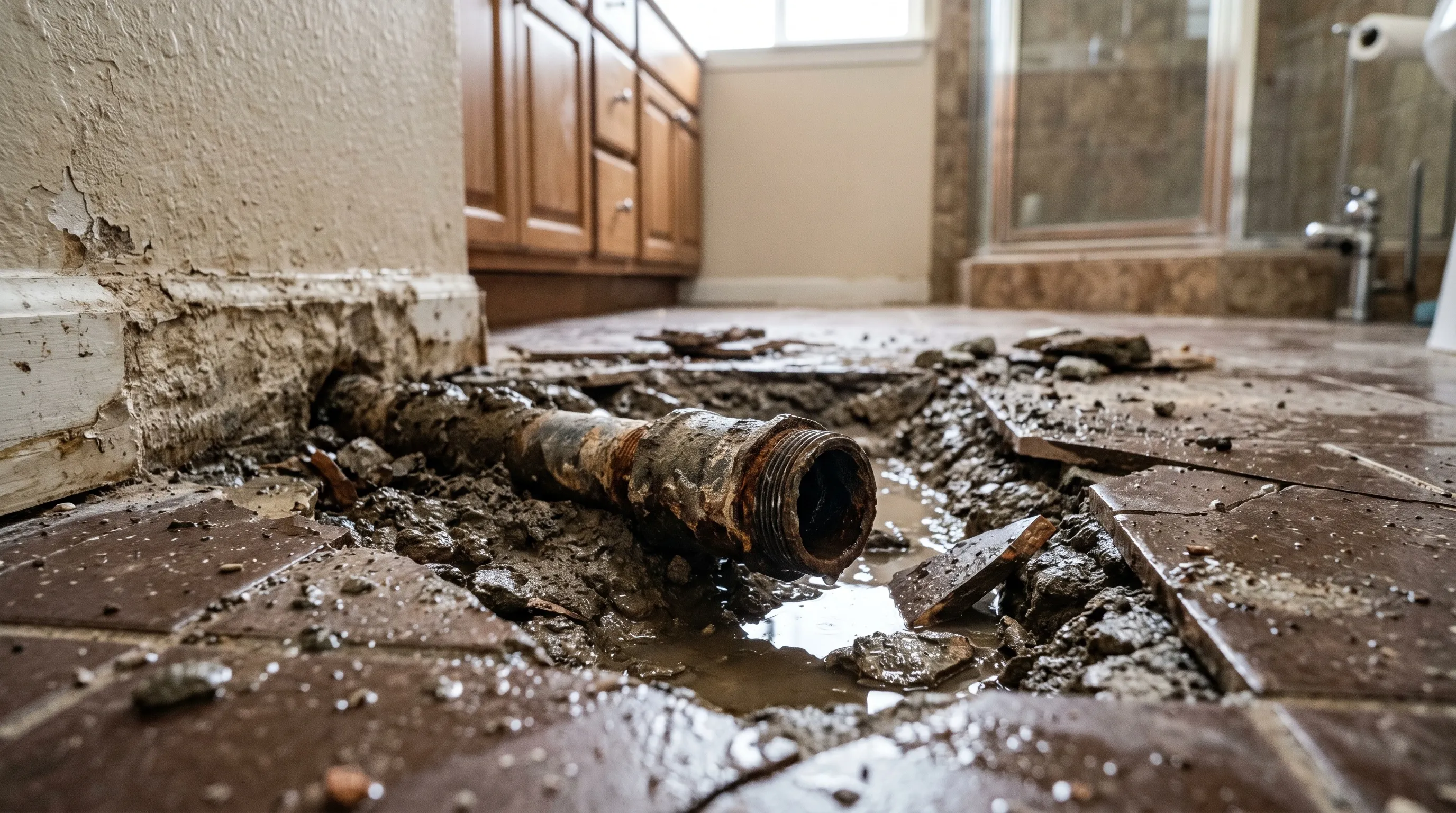
What to do right now
- Shut off the main water valve if you see water coming up through the floor or hear water running with every faucet off.
- Check the water meter. With all water off, a moving dial or leak indicator means water is escaping somewhere.
- Call a leak detection plumber. They use acoustic and thermal tools to pinpoint the leak without tearing up the whole floor.
- Photograph the signs. Warm or damp spots on the floor, cracked tile, warped wood, a high water bill and the meter reading.
- Pull up wet flooring and start drying to keep mold out of the slab and subfloor.
- Report the claim and ask about access coverage before the floor is opened, if you can.
Is it covered?
A slab leak is a break in a water line under the concrete floor. Many homeowners policies split a slab leak claim into parts:
- Water damage to the home and belongings: often covered when the leak is sudden.
- Tear-out and access: often covered, meaning the cost to break the slab or floor to reach the pipe and put it back.
- The pipe repair itself: usually not covered.
Common limits
- Some policies cap slab leak or access coverage at a set dollar amount.
- Slow leaks that went on for months, and foundation settling, are often excluded.
Signs of a slab leak
The sound of running water with everything off, a water bill that jumps for no reason, warm spots on the floor (from a hot water line), damp carpet or cracks in tile, and mildew smells near the floor.
What the adjuster will look at
The leak detection report, how long the leak likely ran, and whether the damage is sudden or long-term. Get the plumber's findings in writing, and photograph the floor before and after it's opened.
Common questions
Does homeowners insurance cover a slab leak?
Often the water damage and the cost to access the pipe are covered, but the pipe repair usually isn't. Many policies have a dollar limit for this.
How do you find a slab leak?
A leak detection plumber uses listening equipment, thermal cameras and pressure tests to find it.
Can a slab leak be rerouted instead of dug up?
Often, yes. A plumber can run a new line through the walls or attic, which can be less destructive.