
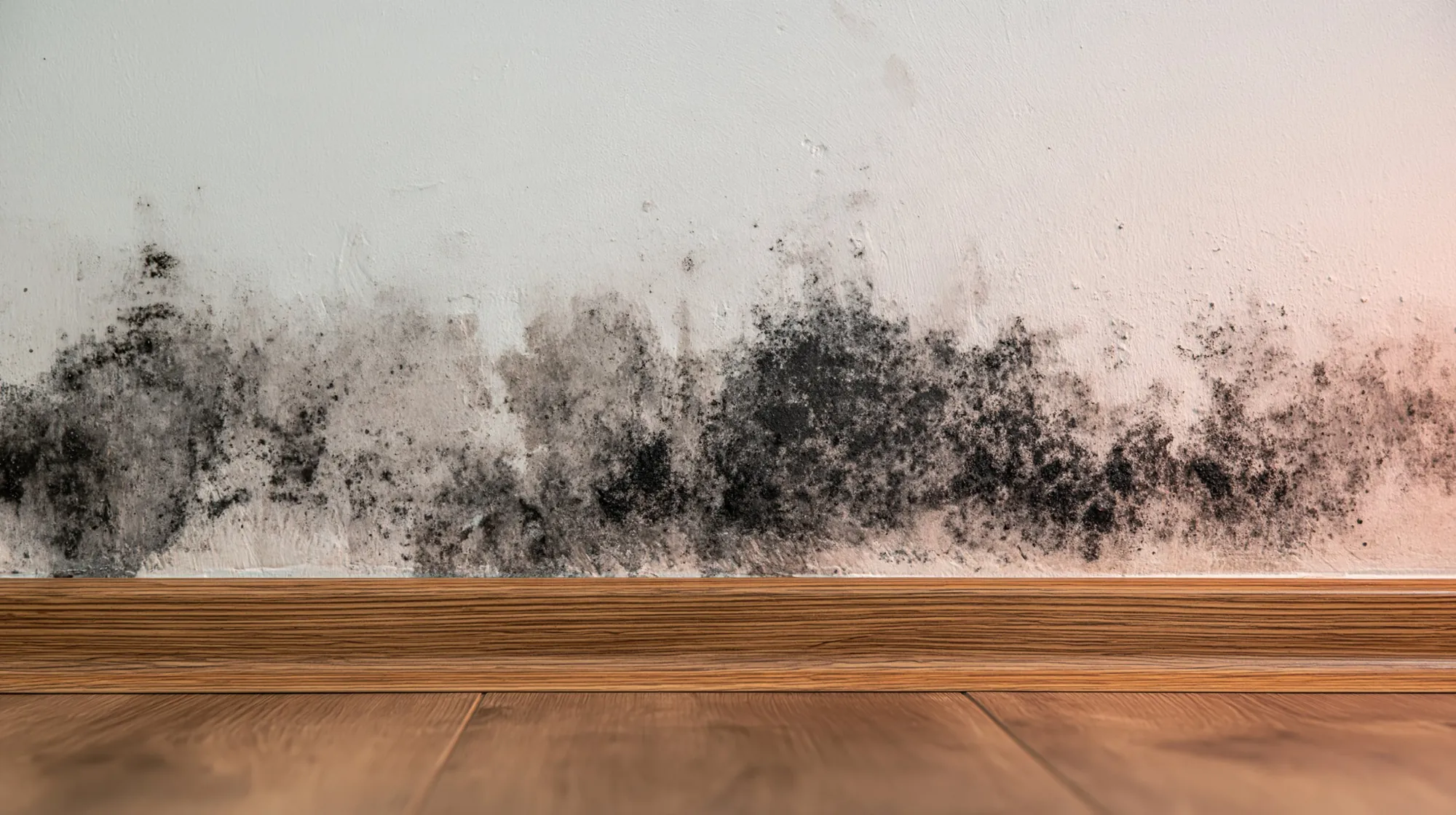
What to do right now
- Find and stop the water source. Mold keeps growing as long as something stays wet.
- Don't disturb it. Scrubbing, sanding or running fans across visible mold spreads spores into the rest of the home.
- Close off the area. Shut doors and turn off the HVAC to that space if you can.
- Photograph it with a date, along with the leak that caused it.
- Get a professional assessment. Small spots can be cleaned, but anything larger than about 10 square feet, or inside walls, needs proper remediation.
- Report the claim and tie it to the leak that caused it.
Is it covered?
Mold coverage usually follows the water that caused it.
- Mold from a covered, sudden leak, like a burst pipe, is often covered, but many policies cap mold remediation at a set amount, commonly $5,000 to $10,000.
- Mold from long-term moisture, humidity, a slow leak or neglected maintenance is usually excluded.
Acting quickly matters. If mold grows because a leak wasn't dealt with, the insurer may argue the damage could have been prevented.
How fast mold grows
Mold can start within 24 to 48 hours on wet drywall, carpet pad and wood. That's why drying fast after any leak is how you avoid a mold problem in the first place.
What remediation involves
Professionals contain the area, remove moldy materials that can't be cleaned, clean what can be saved, dry everything and often test the air afterward. Ask for a written plan and photos of each step.
Common questions
Does homeowners insurance cover mold?
Often, if it came from a sudden, covered leak, usually up to a set limit. Mold from long-term moisture or neglect usually isn't covered.
Can I clean mold myself?
Small surface spots, yes. Larger areas or mold inside walls should be handled by a remediation company.
Is black mold dangerous?
Any mold can affect people with allergies, asthma or weak immune systems. Talk to a doctor if anyone in the home has symptoms.