
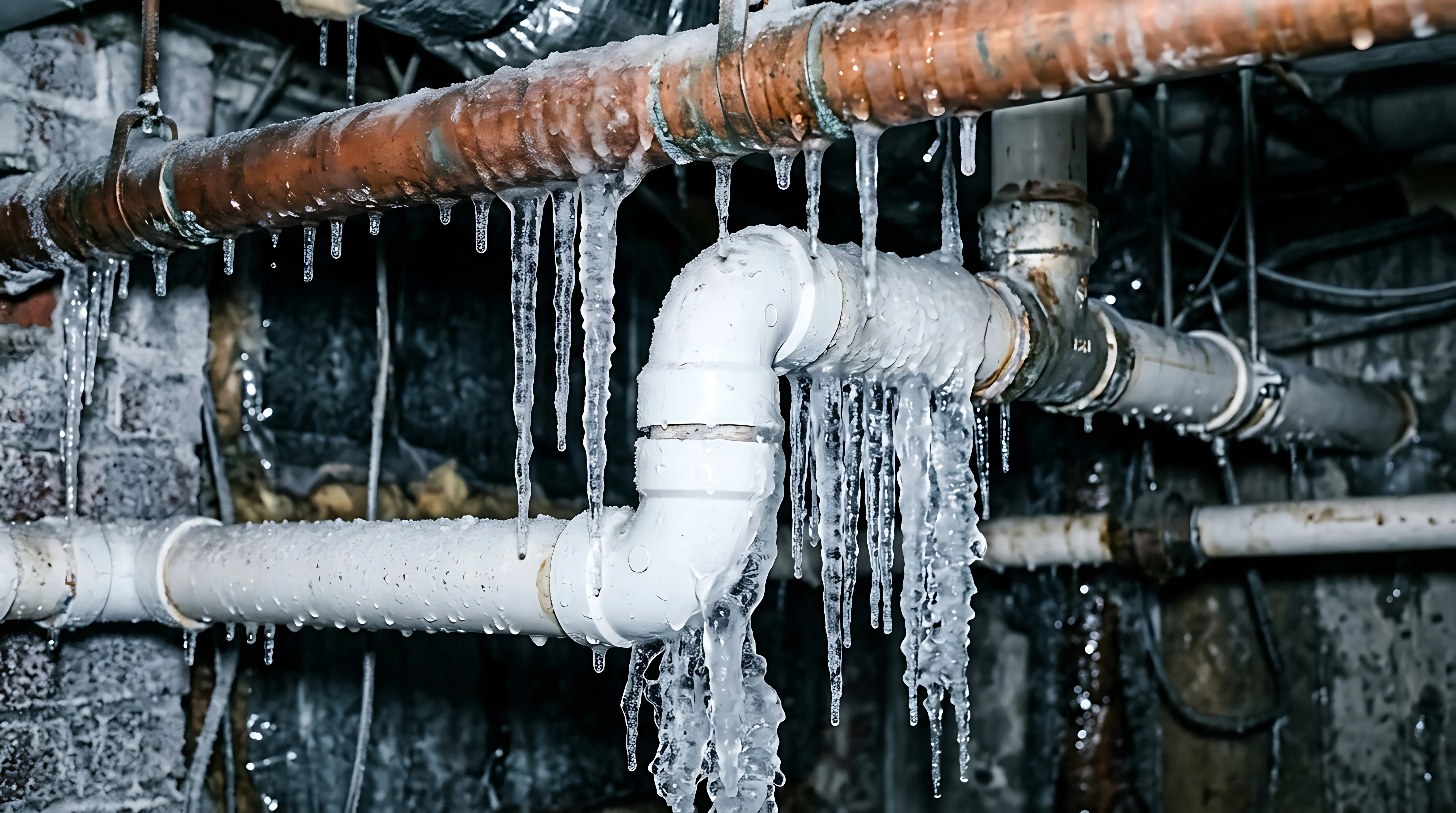
What to do right now
- Shut off the main water valve now. A frozen pipe often splits but doesn't leak until it thaws. Shutting off the water first keeps a crack from turning into a flood.
- Find the frozen section. Look for frost on the pipe, a bulge or a faucet with little or no flow. Pipes on outside walls, in crawl spaces, garages and attics freeze first.
- Thaw it gently, or not at all if it's split. Open the nearest faucet, then warm the pipe with a hair dryer or space heater. Never use an open flame. If you see a crack, leave it for a plumber.
- Photograph everything. The frozen pipe, any split, the thermostat setting and all wet areas, before anything is moved.
- Start drying within 24 to 48 hours. Water inside walls and under floors is what turns into mold.
- Report the claim and note the heat. Write down what the thermostat was set to and whether the heat was on. The adjuster will ask.
Is it covered?
Most homeowners policies cover water damage from a pipe that freezes and bursts, because it's sudden and accidental. That usually includes drying, tear-out and repairs to walls, floors and ceilings, plus damaged belongings, minus your deductible.
Where freeze claims run into trouble
- Vacant or unheated homes. Most policies exclude freeze damage if the home wasn't heated, unless the water was shut off and the pipes drained.
- The pipe itself. Many policies pay for the damage the water caused, but not the cost of replacing the burst pipe.
- Outdoor pipes and sprinklers. Exterior hose bibs and lawn sprinkler lines are often not covered.
Your policy's freezing and vacancy language decides your claim, so read those sections first.
What the adjuster will look at
The questions on a freeze claim are simple: was the house heated, when did it happen, and what did you do about it? A photo of the thermostat, the date and time you found the leak, and quick drying all help. Keep receipts for space heaters, fans, a plumber and any hotel stay.
Should you call a water damage company?
If water reached floors, walls or ceilings, yes. Freeze bursts often happen inside walls, and the water spreads further than you can see. A water damage company can find hidden moisture with meters and start drying right away.
Before the next cold snap
- Know where your main shutoff is and how it turns. Here's how to find it.
- Keep the heat on, at 55°F or higher, even when you're away.
- Open cabinet doors under sinks on outside walls so warm air reaches the pipes.
- Let faucets drip on the coldest nights, especially ones on outside walls.
- Disconnect garden hoses and shut off and drain outdoor faucets if they have an inside valve.
- Insulate exposed pipes in crawl spaces, garages and attics.
- Leaving for a while? Shut off the main and drain the lines, or have someone check the house.
Common questions
Does insurance cover frozen pipes?
Usually, if the home was heated and the pipe burst suddenly. Damage in a vacant or unheated home is often excluded unless the water was shut off and the lines drained.
Is the frozen pipe itself covered?
Often not. Policies usually pay for the water damage and for tearing out and replacing walls to reach the pipe, but not for the pipe.
Can I thaw a frozen pipe myself?
If it isn't cracked and you can reach it, yes: open the faucet and warm the pipe gently with a hair dryer. If it's split, hidden in a wall or you're not sure, shut off the main and call a plumber.