
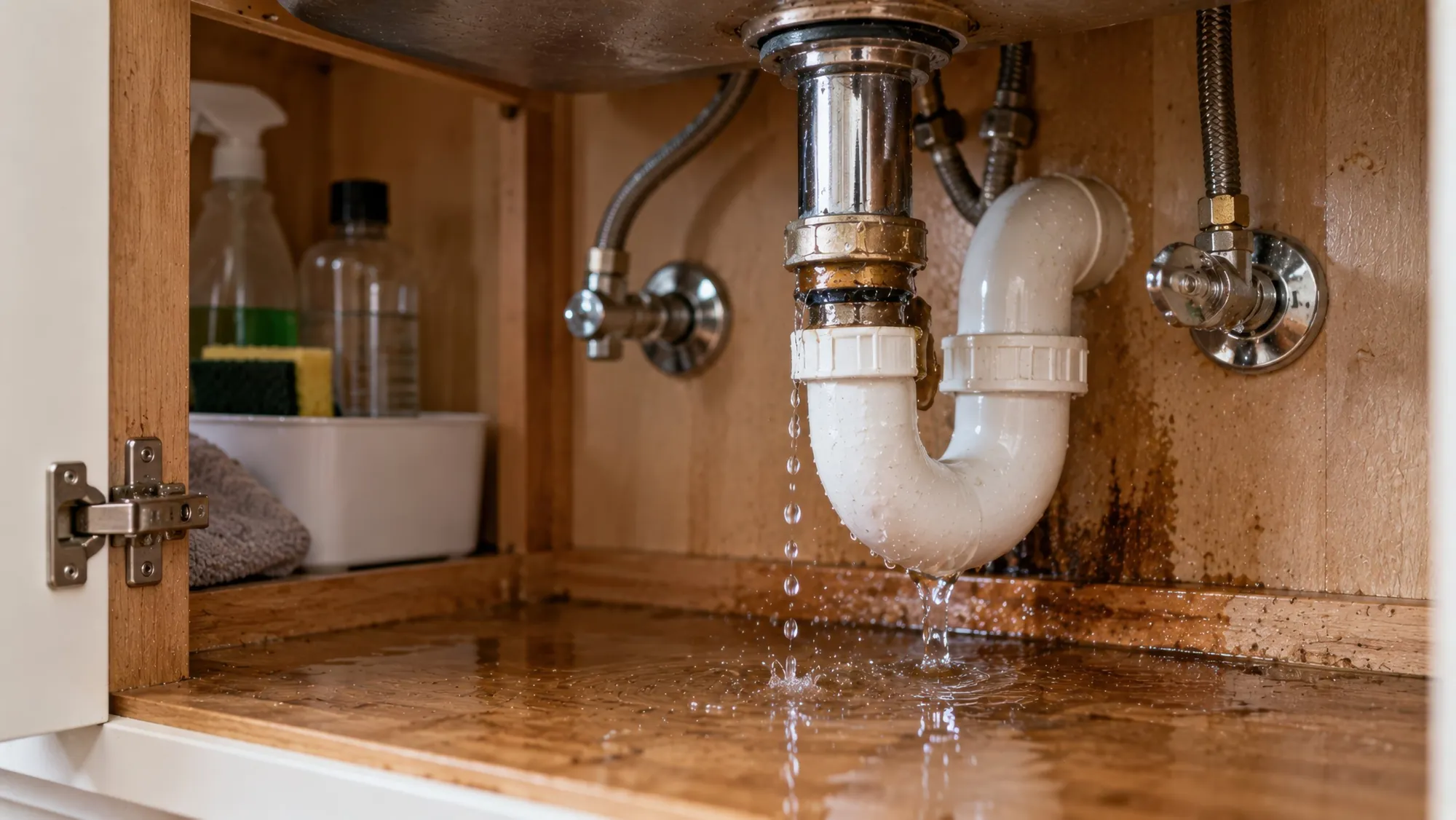
What to do right now
- Shut off the main water valve. It's usually where the water line enters the house: basement, crawl space, utility room or near the water heater. If you can't find it, the shutoff at the street meter works too. How to find and turn it.
- Kill power to wet areas. If water is near outlets, cords or the panel, turn off those breakers. Don't stand in water to do it; call an electrician or the utility instead.
- Open faucets to drain the lines. Run the cold taps on the lowest floor to empty what's left in the pipes.
- Photograph and video everything before you move it. The burst spot, standing water, ceilings, floors and every wet item. This is the backbone of your claim.
- Keep the broken section of pipe. The adjuster may want to see what failed and why.
- Start drying within 24 to 48 hours. Mold can start in that window. Your policy expects you to prevent further damage, and the cost of doing so is usually part of the claim.
- Report the claim to your insurance company. Write down the claim number, the adjuster's name and every call.
Is it covered?
A standard homeowners policy (HO-3) usually covers water damage that is sudden and accidental, and a burst pipe is the classic example. That typically includes drying out the house, tearing out and replacing damaged drywall, flooring and cabinets, and your damaged belongings under contents coverage, minus your deductible.
What's usually not covered
- The pipe itself. Many policies pay to tear out the wall to reach the pipe and put it back, but not to replace the failed pipe.
- Slow leaks. Damage from a drip that went on for weeks or months is usually treated as wear and tear or neglect.
- Frozen pipes in an unheated home. If the house was vacant or the heat was off and the pipes weren't drained, a freeze claim can be denied.
- Mold beyond a set limit. Many policies cap mold remediation, often at a few thousand dollars.
Every policy is different. Your declarations page and the water damage section of your policy are what decide your claim.
What the adjuster will look at
The insurance company wants to know three things: what failed, when it happened, and whether you acted to limit the damage. Clear photos, the broken pipe section, a quick shutoff and fast drying all help. Receipts for anything you paid for, from fans to a hotel night, should be saved.
Should you call a restoration company first?
Yes, if water is still in the house. Stopping the damage is your job under the policy, and waiting for an adjuster to visit before drying can make the loss bigger. Most water damage companies document the job with photos and moisture readings, which helps the claim.
Common questions
Does homeowners insurance cover a burst pipe?
Usually, if the burst was sudden and accidental. Damage from slow leaks, neglect or freezing in an unheated home often isn't covered.
Will my rates go up?
A water claim can affect your premium at renewal. It depends on your insurer, your state and your claim history.
How fast does water damage turn into mold?
Mold can start growing within 24 to 48 hours in wet drywall, carpet pad and wood. That's why fast drying matters.