
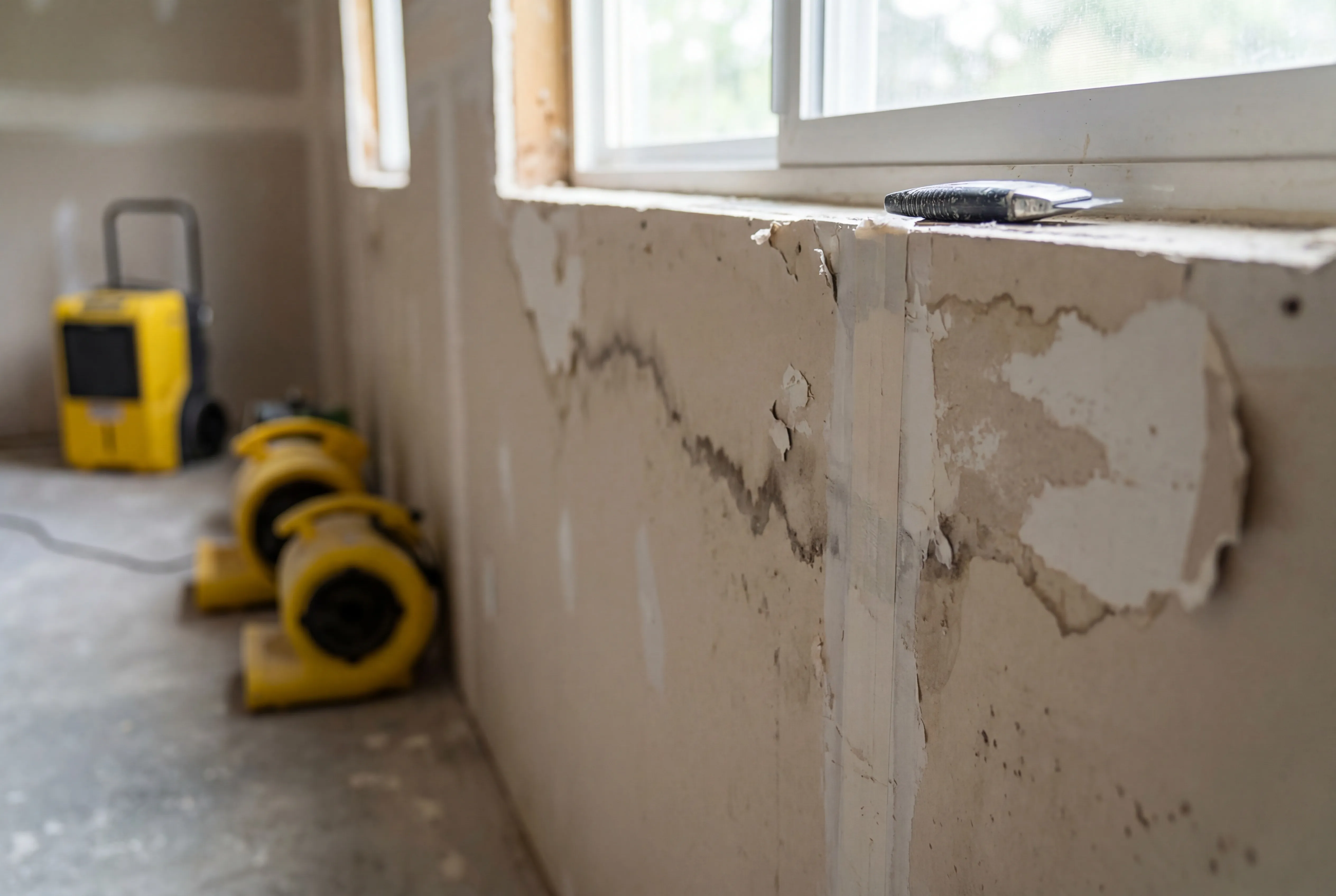
What to do right now
- Stay out if water is near outlets, the panel or appliances. Turn off power to the basement only if you can reach the breaker without standing in water. Otherwise call the utility.
- Watch for gas. If you smell gas or a furnace or water heater is underwater, leave and call the gas company.
- Stop the source if you can. Shut the main valve for a pipe or water heater leak. Stop using drains if it's coming up through a floor drain.
- Photograph and video everything, including how high the water rose on the walls.
- Get the water out. A few inches can be handled with a wet vac. Deeper water needs a pump and a water damage company.
- Start drying within 24 to 48 hours. Basements stay damp, and carpet, drywall and insulation grow mold fast.
- Report the claim and say where the water came from, if you know.
Is it covered?
Basement water is covered or not based on its source.
- Burst pipe, water heater or appliance: usually covered as sudden water damage.
- Sewer or drain backup: usually needs a water backup endorsement.
- Sump pump failure or overflow: usually needs the same backup endorsement.
- Groundwater or surface water from outside: treated as flood, covered only by a flood policy.
See sewer backup, sump pump failure and flood vs water damage for each case.
Figure out where it came from
Clear water near a pipe or the water heater points to plumbing. Dirty water around a floor drain points to a backup. Water seeping along the base of walls after heavy rain points to groundwater. The source decides the claim, so photograph it and ask a plumber to put the cause in writing.
Finished basements cost more
Wet carpet, pad, drywall and insulation usually have to come out. That's normal, and it's why basement claims are often larger than they first look.
Common questions
Does homeowners insurance cover a flooded basement?
It depends on the source. Plumbing failures are usually covered. Backups need an endorsement, and outside flooding needs a flood policy.
Can I pump the water out myself?
A few inches, yes, once the power is safely off. Deep water should be pumped out gradually by a professional to protect the foundation.
How fast does mold start in a basement?
Often within 24 to 48 hours on wet drywall, carpet pad and wood.