
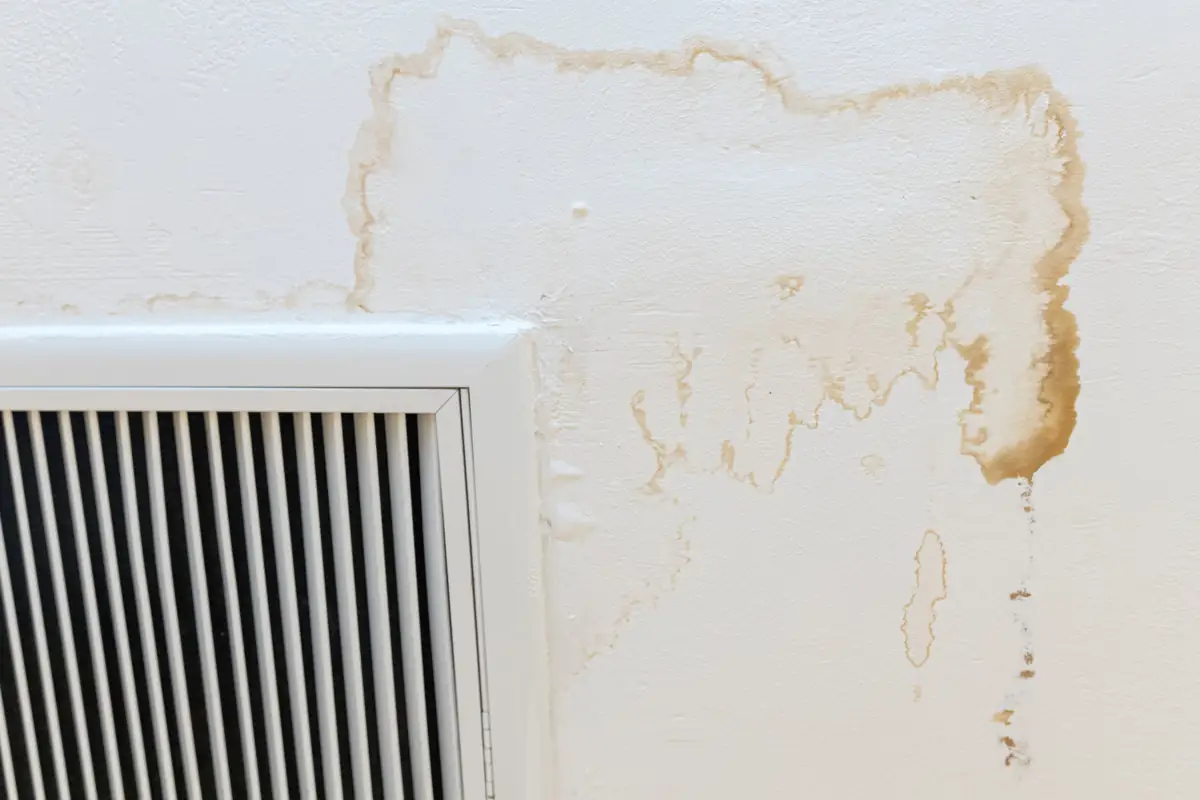
What to do right now
- Turn the AC off at the thermostat, then at its breaker if water is near the unit's wiring.
- Find where it's coming from. Most leaks come from a clogged condensate drain line or an overflowing drain pan under the indoor unit, often in an attic, closet or basement.
- Empty the drain pan with a wet vac or towels so it stops spilling.
- Check the ceiling below an attic unit. Turn off power to wet light fixtures and catch drips with buckets.
- Photograph the unit, the pan and the damage before anything is moved.
- Start drying within 24 to 48 hours. Wet insulation and drywall hold water and grow mold.
- Call an HVAC technician to clear the drain line and check the pan and float switch before you turn the system back on.
Is it covered?
When an AC drain line clogs or a pan overflows and suddenly soaks a ceiling or floor, most homeowners policies cover the resulting water damage, minus your deductible.
What's usually not covered
- The AC unit, pan or drain line. Repairs to the system are treated as maintenance.
- Slow, repeated leaks. Stained or rotted ceilings from drips that went on for weeks are often excluded.
- Mold beyond a set limit, if the leak went unnoticed.
Why ACs leak
Air conditioners pull moisture out of the air and send it down a small drain line. When that line clogs with algae or debris, or the pan cracks, the water has nowhere to go. A frozen coil can also melt all at once and overflow the pan.
What the adjuster will look at
Whether the leak was sudden or had been dripping a while. Fresh staining and a clogged line found right away read as sudden. Old rings on the ceiling read as long-term. A technician's written note on the cause helps.
Common questions
Does homeowners insurance cover an AC leak?
Often, for the sudden water damage it caused. The AC repair itself usually isn't covered.
Can I keep running the AC?
Not until the drain line is cleared and the pan is dry. Running it keeps adding water.
How do I stop it happening again?
Have the drain line cleaned during yearly service, and ask about a float switch that shuts the system off when the pan fills.